Multi-platform scheduling used to be a convenience. For many marketing teams today, it is a necessity. As audiences fragment across channels and publishing expectations rise, the idea of manually posting natively to every platform quickly becomes unsustainable.
At the same time, scheduling content everywhere, all at once, carries its own risks. Anyone who has managed social at scale knows the tension: consistency versus relevance, efficiency versus nuance, systems versus judgment.
This article is not about tools, shortcuts, or “posting everywhere for maximum reach.” It is about how experienced marketers approach multi-platform scheduling as part of a broader workflow—what it actually means, where it helps, where it breaks down, and how to apply it responsibly without flattening your brand or burning out your team.
Why This Topic Matters Now
Social media has not become simpler as platforms mature. It has become more demanding.
Most brands are expected to maintain a visible presence across multiple networks simultaneously: LinkedIn for credibility and employer branding, Instagram for visual storytelling, X for timeliness and commentary, and often others layered on top. Each platform rewards different behaviors, formats, and cadences, yet the volume expectations keep increasing.
At the same time, teams are leaner. Headcount has not grown in proportion to channel complexity. Marketers are asked to “do more with less” while maintaining quality, brand safety, and responsiveness.
Multi-platform scheduling sits directly at this pressure point. It promises relief—less manual work, fewer missed posts, more predictable output. But without clear principles, it also introduces risk: generic messaging, tone mismatch, and content that technically publishes but fails to land.
Setting Expectations Up Front
There are no shortcuts here. Scheduling across platforms does not guarantee engagement, reach, or growth. It does not remove the need for strategy, editorial judgment, or ongoing review.
What it can do—when applied thoughtfully—is reduce operational friction. It can create breathing room for better thinking, better content decisions, and more consistent execution.
The goal is not automation for its own sake. The goal is a system that supports good marketing judgment under real-world constraints.
What This Actually Means in Practice
Clarifying the Term
Multi-platform scheduling is often misunderstood as “posting the same content everywhere at the same time.” That is not what experienced teams mean by it.
In practice, it refers to:
Planning content centrally
Preparing platform-appropriate versions in advance
Publishing them on a defined schedule across multiple channels
The key word is versioned. The same underlying idea may travel across platforms, but its expression changes.
Commonly Confused Concepts
Several ideas tend to get conflated:
Cross-posting: identical content pushed everywhere
Multi-platform scheduling: coordinated but adapted publishing
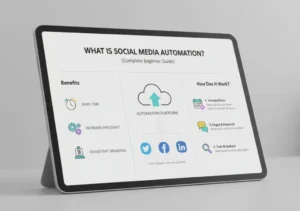
Automation: system-driven execution of pre-made decisions
Cross-posting is a tactic. Scheduling is a workflow. Automation is an enabler, not a strategy.
When teams blur these distinctions, quality suffers. When they are clear, scheduling becomes a support system rather than a blunt instrument.
How This Shows Up in Real Workflows
In mature workflows, scheduling typically happens after editorial decisions are made, not before. The sequence matters.
1. A core message or theme is defined
2. Platform roles are considered
3. Content is adapted accordingly
4. Publishing is scheduled to reduce manual overhead
Scheduling is the last mile, not the starting point.
How It Works (Conceptually, Not Technically)
At a conceptual level, multi-platform scheduling is a decision funnel.
Inputs
The inputs are human-led:
Campaign goals or editorial themes
Audience context per platform
Content constraints (format, tone, timing)
This is where strategy lives. If this step is weak, scheduling will amplify the weakness.
Decisions
Next come structured decisions:
Which platforms does this idea belong on?
What form should it take on each?
When does it make sense to publish, given audience behavior?
These decisions benefit from systems and templates, but they still require judgment.
Outcomes
The outcome is not “content posted.” The outcome is:
Reduced execution friction
Fewer last-minute scrambles
More consistent brand presence
Performance results still depend on relevance, resonance, and follow-through.
Platform, Channel, and Use-Case Differences
One of the biggest mistakes in multi-platform scheduling is assuming platforms differ only in format. The differences run deeper.
LinkedIn: Intentional and Contextual
LinkedIn content tends to reward clarity, relevance, and professional context. Scheduled content works well here when it aligns with broader narratives—industry insight, organizational perspective, or practical experience.
What breaks down quickly is over-scheduling. Too much content, too often, dilutes perceived credibility.
Instagram: Visual Rhythm Matters
On Instagram, scheduling supports consistency, but timing and sequencing matter. A feed is cumulative. Posts are not isolated moments.
Scheduling without visual and narrative flow leads to feeds that technically update but feel disjointed. Here, scheduling needs to account for rhythm, not just frequency.
X: Timeliness Over Perfection
X (formerly Twitter) is the most fragile environment for rigid scheduling. Conversations move fast. Context shifts daily.
Scheduling works best here for:
Foundational content
Evergreen commentary
Planned announcements
Reactive engagement still requires human presence. No schedule can anticipate the moment.
The Mental Model Shift
Rather than asking, “How do we post this everywhere?” a better question is:
“What role does this platform play in the broader system?”
Scheduling becomes easier—and safer—when each channel has a defined purpose.
What Works Well (With Reasoning)
Centralized Planning, Decentralized Expression
The strongest setups centralize planning but decentralize execution. Themes and priorities are shared, but expression adapts to context.
This works because it balances consistency with relevance. The brand sounds coherent without sounding copy-pasted.
Batching Without Blindness
Batching content for scheduling reduces cognitive load. It frees up time. But effective batching includes review checkpoints.
Content is prepared in advance, but teams leave room to adjust if context changes. This prevents the “scheduled but tone-deaf” problem.
Using Scheduling to Protect Thinking Time
One underrated benefit of scheduling is psychological. When execution is under control, teams have more space for:
Creative exploration
Performance analysis
Audience listening
Scheduling is valuable not because it posts content, but because it buys time.
Limitations, Risks, and Trade-Offs
Where People Get This Wrong
The most common failure mode is treating scheduling as a replacement for engagement. Content goes out, but no one is watching how it lands.
Another is assuming efficiency equals effectiveness. Posting more consistently does not automatically mean posting better.
Context Drift
Scheduled content is blind to breaking news, cultural moments, or sudden shifts in sentiment. Without monitoring, brands can appear disconnected or, worse, insensitive.
This is not a technical flaw. It is a governance issue.
The Illusion of Control
Scheduling can create a false sense of certainty. The calendar looks full. The work feels “done.”
But social performance is dynamic. Over-reliance on schedules can reduce responsiveness if teams are not intentional about review and adjustment.
Human Judgment vs. Systems
What Should Remain Human-Led
Platform role definition
Editorial judgment
Tone calibration
Crisis and context awareness
These are not system problems. They are leadership problems.
Where Systems Help
Systems excel at:
Reducing repetitive execution
Enforcing consistency
Making workflows visible
They support good decisions. They do not make them.
A Useful Rule of Thumb
If a decision requires empathy, cultural awareness, or strategic trade-offs, keep it human. If it requires repetition and consistency, systematize it.
Where This Is Heading
The future of multi-platform scheduling is not about posting faster or more frequently. It is about tighter integration between planning, publishing, and learning.
What is likely to remain constant:
Platform differences will persist
Human judgment will remain essential
Over-automation will continue to backfire
The teams that perform best will not be the most automated, but the most disciplined in how they apply systems.
Final Takeaways
Multi-platform scheduling is not a growth hack. It is an operational practice.
Used well, it reduces friction, supports consistency, and creates space for better marketing work. Used poorly, it flattens messaging and distances brands from their audiences.
The responsibility lies with the marketer, not the system. Clear platform roles, thoughtful adaptation, and ongoing oversight matter more than any publishing calendar.
Scheduling should serve strategy, not replace it. When that principle holds, multi-platform execution becomes sustainable rather than superficial.